“Judge not” is one of the most popular passages in our society,
especially among those who reject Jesus.
It seems to fit
The thought is our belief system is private
And, of course us our moral choices are relative.
So it appears moral life choices are now adjusted
What was amoral or a lack of concerns for right vs. wrong standards us now moral
People love “judge not” because it seems to be a handy way of saying, “
“You can’t tell me I’m wrong.”
In all issues of disagreement & for certain in moral issue
you’ll see this verse swiftly pulled out as a deflective weapon.
Jesus is the one who spoke this phrase first
But Jesus didn’t share our presuppositions about private religion & relative morality.
Jesus actually was constantly making public judgments,
And yikes, many of those judgements were extremely aggressive.
In John 7:7 he told His followers that the world hated Him
because He testify about it that its activities & actions were perverse, twisted & evil
So Jesus didn’t say we’re all supposed to just throw up our hands & say,
Hey, you know, Who am I to judge?
You judge someone not when you assess a persons position,
That means judging is coming to a conclusion of where they’re coming from
But Jesus didn’t come to condemn but to save it.
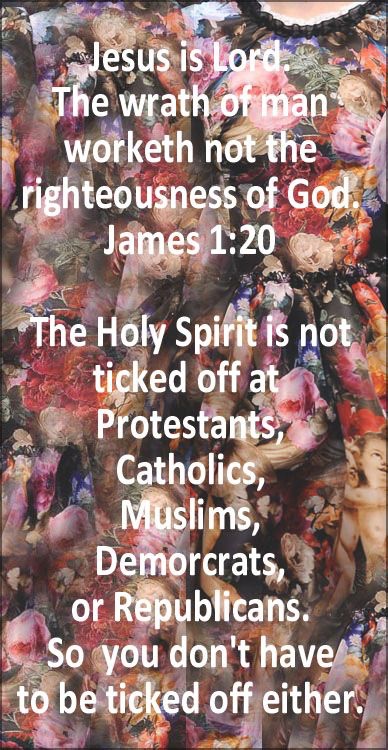
There is a difference between speaking a harsh truth & condemning.
Condemning goes beyond saying “This is wrong” to saying, “I don’t want you around anymore.”
Condemning is being more enraged at someone else’s life choices than we are embarrassed by your own life choices past & present.
Dietrich Bonhoeffer said we’re first frustrated with the hypocrisy of others But next we recognize that the same hypocrisy in ourselves.
When We confront by condemning others we’re painfully aware of our own issues that are the same.
Condemning is refusing to forgive (or when you forgive you refuse to forget)
To refuse to forgive others is to be ignorant of the enormity of what God has forgiven us
True forgiveness is as Tim Keller reminds
“We forget by saying the wrong done to us is now irrelevant.”
To condemn is saying “I’m going to remind you of this all the time and I’m going to use it as justification for being cold toward you.”
In other words, we don’t have any concept of forgiveness at all.
Forgiveness means absorbing the debt & offering love & goodness in return.
When we condemn, when we “cut off” those we disagree with.
As J.D. Grear wrote
“You just disagree so strongly with someone— over something like faith or morality or politics— and because you can’t agree you cut them off. You say, in essence, We can’t really be friends if we disagree on this issue. The ultimate statement of judging condemnation is,
“Depart from me.”
Consider Jesus with Judas.
Even after Judas had betrayed him, Jesus says to him,
“Friend, why have you come?”
He says Friend. Jesus offers the hand of friendship to him—
Jesus offers the hand of friendship to us!—when we are betrayers of Christ too.
How can we say “Depart from me” to someone else,
when God doesn’t even say that to us?
J. D. Grear notes
“When we campaign to others & gossip to others about our cause against another we’re castigate & condemning
The ugly danger of castigate & condemning is we’ve positioned those we’ve condemned in the hell of our making.
And we do that without giving them the chance to change.”
We can mask it all with we’re“praying for them” or a classically say “bless their heart.”
We are so stiff at this point that we refuse to receive criticism.
Why do we hate criticism? Isn’t it because we hate to admit that we have faults?
Actually the face of criticism, we could say you right.
But I could show you worse things you didn’t notice about me!”
There is this Irony alert.
As believers, if we refuse to correct others,
We demonstrate we don’t believe that the Bible is true, We demonstrate we don’t think the other person can actually change. We demonstrate we don’t think the other person will listen,
By all this We demonstrate we we’re judging & condemning them from the start.
By condemning we’re demonstrating the other person is hopeless.
I thought that Jesus was capable as our Savior to raise the dead.
Amalek we’re descendants of Esau the twin of Jacob
Amalek literally means squeeze or wring.
It has an etymology of wringing or twisting a birds neck to kill it
It has an etymology of gaining by violence through pressure
In Exodus 17 they attack the Israelis in the hinder-parts
The hinder-parts are an assault from behind
It’s also vivid of an attack when were down on our back & weakened physically by disease or financial losses.
The Amalekites lived in the valley. (Low life’s)
Exd. 17:8
The possession of water (wells, etc.) was a cause of contention In the ancient times where people live in arid desert environments
The Israelis had gotten a river of water that was now gushing from this rock in Rephidim
Rephidim means rest.
The Amalekites wanted that water & were willing to fight to gain possession.
But to do this meant they must first disposess (humiliate & drive) Israel away through an attack.
Num. 24:20
Then Moses said concerning Amalek that—“Amalek feared not God” They didn’t fear the consequences That thought of consequential relationships was not a part of their perspective
Deut. 25:17-18
Paul wrote that we’re to: (suggestive that our lower flesh nature is like Amalek)
Live freely, energized & motivated by God’s Spirit.
Then we won’t feed the compulsions of selfishness.
For there is a root of sinful self-interest fights with this freeing spirit,
And this free spirit is incompatible with selfishness.
These two ways of life are antithetical, so that we can’t live one way & at then another way, according to how we feel
Why need to choose to be led by the Spirit & so escape the erratic compulsions of a performance -dominated existence
Gal 5:17-20 paraphrased
We’re to abstain (refuse & avoid) our fleshly sensual urges
(the evil desires, the passions of the flesh, our lower nature)
we’re not to live in the valley (being low life’s)
These feelings, these low negative prompts from our old self
wage war against our soul
(our soul is our inner being that wants to walk & be close to Jesus)
1 Peter 2:11 paraphrased
God has given us His precious & exceedingly great promises,
so that through them we can escape from the moral decay
(the rottenness & corruption) that is in our lower nature
because of covetousness (lust & greed for what others have),
and become sharers (partakers) of the Christ’s nature
(our new nature of God’s Spirit)
2 Peter 1:4 | AMP (adaptations)
The battle was fought by
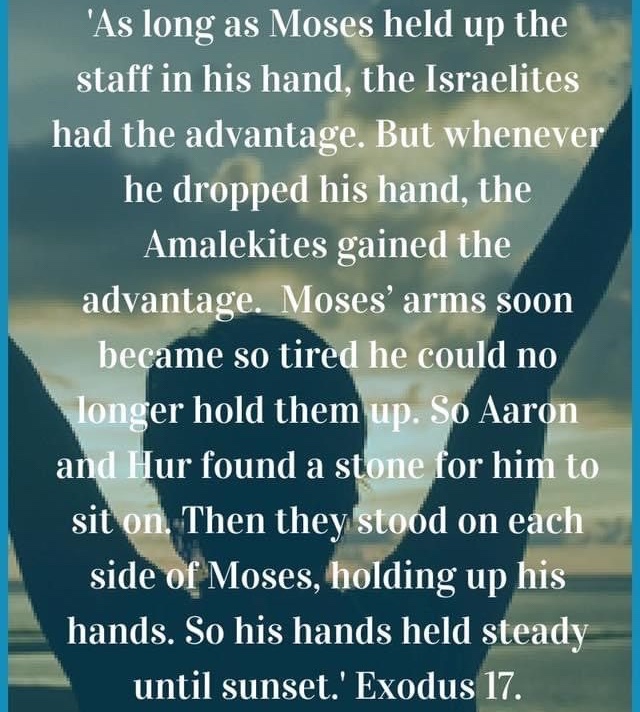
Moses going up on a hill with Aaron & Hur
He went up to gain a perspective of the battle in the valley by Joshua
He held his hands & arms up (a picture of prayers)
When his hands grew heavy Aaron & Hur lifted them up.
When Moses held up his hand, Israel prevailed & when he let down
his hand Amalek prevailed
Exd. 17:11
The uplifted hand was emblematic of prayer & supplicating of God:
Hear our voice & supplications, when we cry to You, Lord when we
lift up our hands toward Your holy oracle
Ps. 28:2
Paul wrote
I will that men pray everywhere, lifting up holy hands, without wrath & doubting
1 Tim. 2:8
Like “Moses’ our hands grow heavy. We grow weary of supplicating to God!
Jesus said
We ought always to pray & not to faint
Luke 18:1
We fail quickly when our hearts get “heavy” with stuff in us
that wrings our spiritual neck.
And as soon as we lose the spirit of dependency on God
our fleshly lower nature (low life valley living prevails)
Aaron & Hur were with Moses, they
Stayed up his hands, the one on one side & the other on the other side.
We need to hang out with people of faith.
Through God in His grace He provides for us supported on each side
“Likewise the Spirit also helps our infirmities.
For we know not what we should pray for as we should;
but the Spirit Himself makes intercession for us with groanings
which can’t be spoken”
Rom. 8:26
“And another angel came & stood at the altar having a golden censer;
and there was given unto Him much incense, that He should offer it
with the prayers of all believers on the golden altar which was before
the throne”
Rev. 8:3
Jesus Christ always receives our supplications & offers them to God
as a sweet perfume fragrance of His own perfections.
Exd. 17:13 notes that Joshua discomfited (humiliated & defeated)
Amalek & his people with the edge of the sword.
The “sword” the Word of God
For the Word that God speaks & is alive & full of power
(making it active, operative, energizing & effective)
it is sharper than any two-edged sword,
penetrating to the dividing line of the breath of life (soul)
and [the immortal] spirit & of joints & marrow
(of the deepest parts of our nature)
exposing & sifting & analyzing & judging the very thoughts
and purposes of our heart.
Hebrews 4:12 AMP
It is not by prayer alone that we can fight the flesh
(our low life nature)
The Word, is needed.
The Psalmist wrote,
Your Word us what I’ve filled my heart & life with that I might
not sin against You
Ps. 119:11 paraphrased
We have to consider (get this new perspective riveted in our minds)
That we ourselves are dead to sin & our relation to it is broken,
Now we’re alive to God [living in unbroken fellowship with Him] in Christ Jesus.
Romans 6:11 | AMP
We have to Shun (avoid, reject & evade) old lower life
(lusts & desires & passions)
flee from them & aim at & pursue righteousness
(all that is virtuous & good, right living, conformity to the will of God in thought, word & actions)
and aim at & pursue faith, love & peace
(harmony & agreeability & reasonableness with others)
in fellowship with all (believers) who call on the Lord out of a new heart nature.
2 Timothy 2:22 | AMP adapted
There is a fight to be fought
Fight the good fight of the faith; lay hold of our new life to which we been called too
1 Timothy 6:12
I have fought the good (worthy, honorable & noble) fight,
I have finished the race, I have kept (firmly held) the faith.
2 Timothy 4:7 | AMP
So fight, not as not running in uncertainly (without definite aim).
We fight aimlessly boxing like one beating the air & striking
without hitting our adversaries
But [like a boxer] we buffet & beat our body
(handle it roughly, discipline it by hardships)
and we subdue it, for fear that after proclaiming
to others we know Jesus & His Word, that we ourselves should become unfit
( and not stand up to our tests & be unapproved & rejected as a counterfeit)
1 Corinthians 9:26-27 | AMP adapted
Amalek was not destroyed completely.
He wasn’t vanquished on this occasion.
There is no way of destroying or eradicating our low life valley living nature inside of us.
We like Joshua discomfit it (humble it) but it still survives.
Why, does God permit the this nature to remain in us?
We need a deeper & personal realization of the havoc
of how sin has affected us. We have to understand our
total depravity to appreciate God’s amazing grace which has saved us as wretches.
This makes us humbled (discomfited) before God
This keeps us more dependent on Him in our battles.
This makes uS appropriate to ourselves God’s all-sufficient
grace & causes us to learn that His strength is made perfect in our weaknesses,
Then we appreciate His keeping-power, as without Jesus
we can do nothing & we sink down to a low life existence.
Remember what Amalek did to you on the way
How Amalek did not fear God,
but when we were faint & weary he attacked us…you must not forget.
Deuteronomy 25:17-19 | AMP adapted
What is the fix against faintness & weakness?
My Grandma Blanch Newton Stickney would repeat this passage to me in her 80s
“God gives power to the faint & to them that have no might He increases strength.
The youths shall faint & be weary & the young will utterly fail;
But they that wait on the Lord (by prayer & God’s Word)
Will renew their strength. they shall mount up with wings as eagles;
they will run & not be weary; they will walk & not faint”
Isa. 40:30,31
God, Who will transform & fashion anew this body of our humiliation
to conform to & be like the body of His glory & majesty,
by exerting that power which enables Him even to subject everything to Himself.
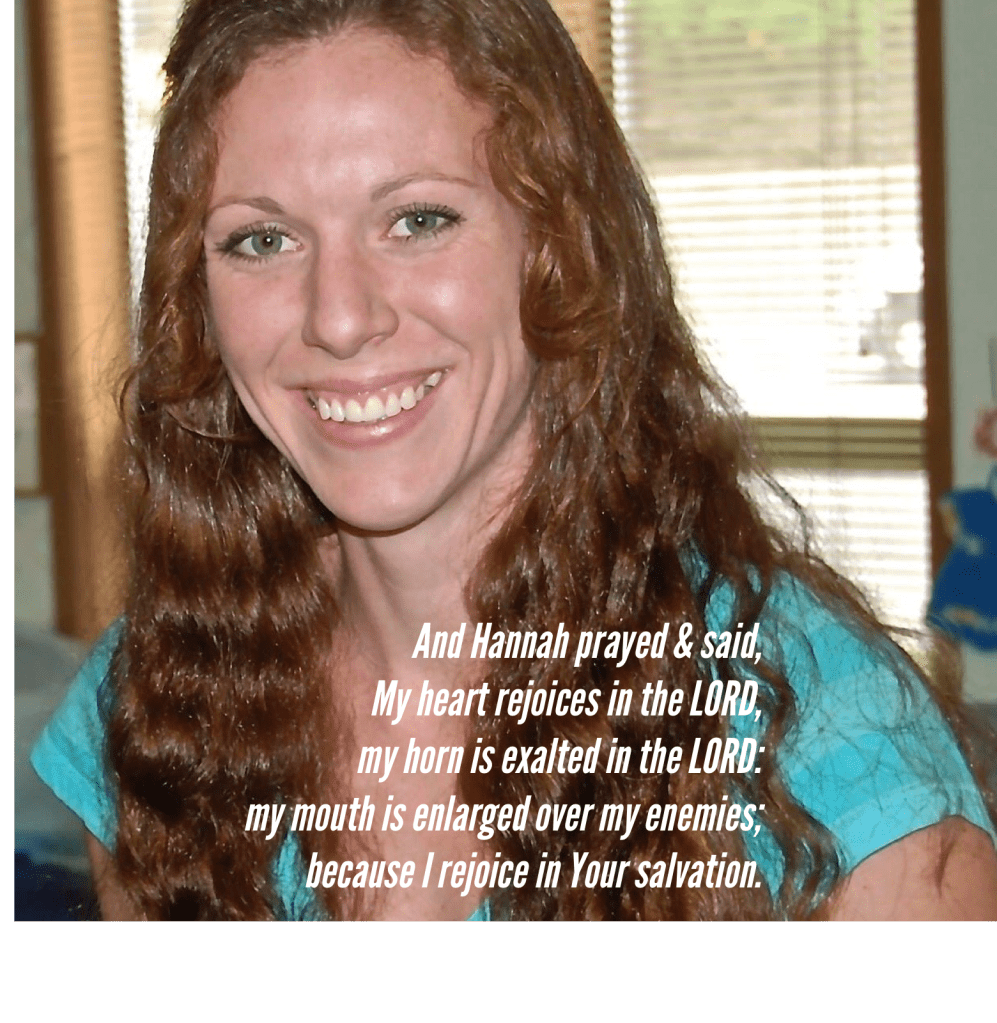
And Hannah prayed & said, My heart rejoices in the LORD, mine horn is exalted in the LORD: my mouth is enlarged over my enemies; because I rejoice in Your salvation.
1 Sam. 2:1
Hannah poured out her heart in thanksgiving.
Her words reveal an in-depth knowledge of God,
Her expressions demonstrate that she was in awe of God’s amazing character,
Her soul exalts God’s incredible deeds
Her spirit shows her expectations that the Lord would be doing wonders for her.
Her prayer appears to be a rebuke of her husband Peninnah
for the many spiteful things he had said to Hannah,
but really her Spirit prompted prayer prophetically goes beyond this domestic squabble
She’s echoing forward 1000s of years to the triumph of Israel over her foes
and to the eventual reign of Christ.
This is resonated in Mary’s song, often called the Magnificat
Luke 1:46–55
which was obviously influenced by Mary’s knowledge of Hannah’s song.








 Stevemidkiff's Blog